Meshyrodenir
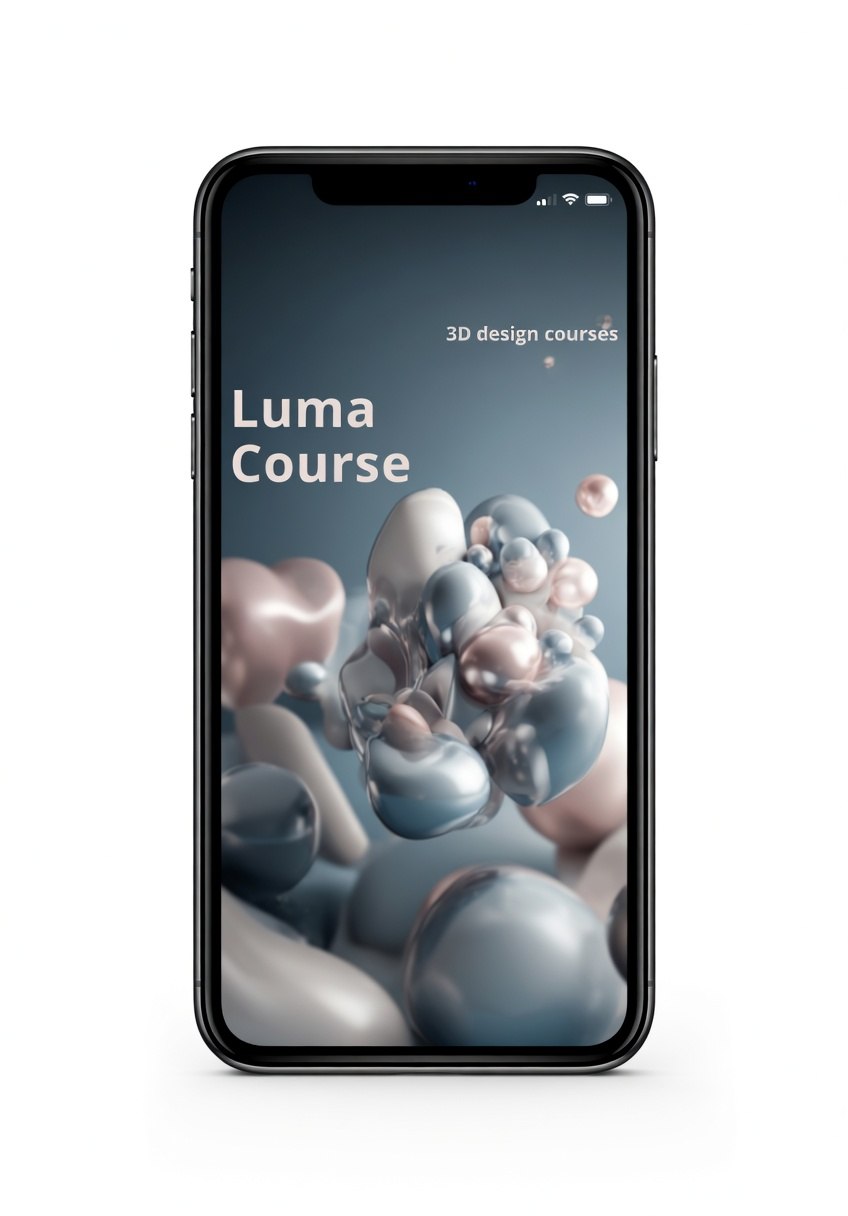
Luma Course
Luma Course
Couldn't load pickup availability
Self-paced learning overview
- Lifetime Access
- Updated 2026
- 30-Day Guarantee
Share
Do your scenes feel flat or lack depth? You're not alone. Often the structure is clear, but atmosphere and detail are missing. Lighting may feel random or unclear. Materials can look similar and lack distinction. As a result, the scene does not communicate the intended idea clearly.
This course helps you understand how to work with lighting and materials in a 3D scene. You will explore how lighting shapes mood and highlights form. Materials are presented as a tool for variation. Each step is explained with examples. This helps create more cohesive and expressive scenes.
What's Inside
-
Module 1: Light Fundamentals
Core principles of lighting and its role in a scene -
Module 2: Light Types and Direction
Different types of light and their effect on objects -
Module 3: Shadows and Contrast
How shadows create depth and volume -
Module 4: Material Basics
Overview of basic material properties -
Module 5: Surface Detail
Creating variation in surfaces -
Module 6: Atmosphere Building
Building mood through light and materials -
Module 7: Scene Refinement
Refining scenes with attention to detail -
Module 8: Final Composition
Final scene assembly with lighting and materials
✅ Perfect if you:
- already create simple scenes
- want to add depth and mood
- want to understand lighting better
❌ Not for you if:
- you are new to basic forms
- you are looking only for technical setups
What You'll Learn
- how lighting works in a scene
- how to create shadows and contrast
- how to use materials
- how to add surface detail
- how to build atmosphere
- how to combine light and form
- how to refine scenes
- how to finalize compositions
30-day return policy
You can explore the materials within 30 days. If the format does not meet your expectations, a refund option is available according to the terms.
Is the course suitable for beginners?
Is the course suitable for beginners?
Yes, the materials are structured step-by-step, starting from basics and gradually moving to more complex topics.
How does the learning process work?
How does the learning process work?
The course is divided into modules. Each module includes explanations, examples, and practice tasks.
Can I learn at my own pace?
Can I learn at my own pace?
Yes, you can move through the course at your own speed and revisit materials anytime.
What if I have questions?
What if I have questions?
You can reach out through the contact form and receive a clear response.